How to Get Advanced Reader Copies in Publishing

Getting your hands on an advanced reader copy—an ARC—is all about becoming a trusted reviewer and connecting with publishers. This can happen on platforms like NetGalley or even through a direct email pitch. At its core, it's a simple trade: you get an early copy of a book in exchange for an honest and timely review, helping to stir up excitement before the official launch.
What Exactly Is an Advanced Reader Copy?
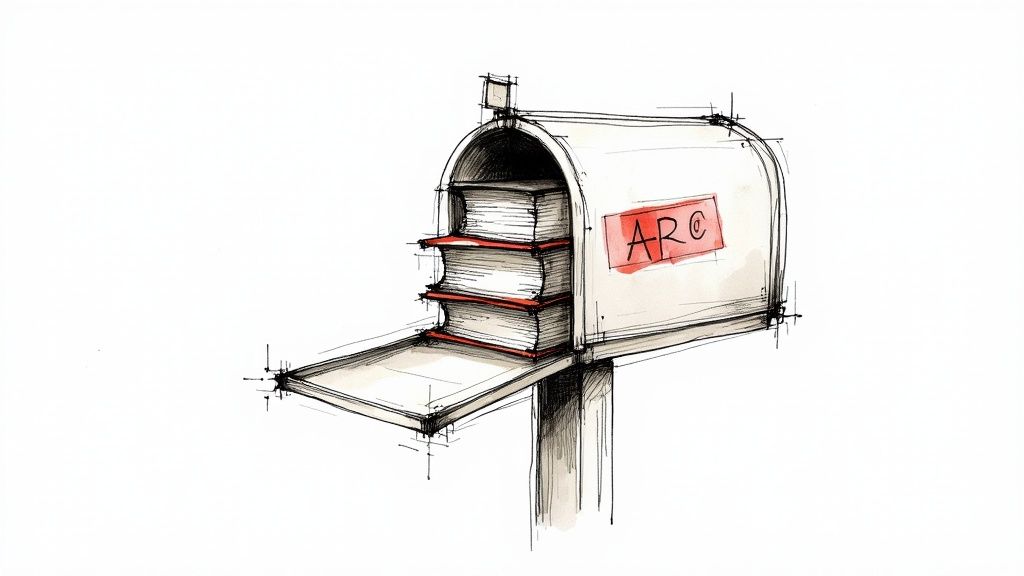
Before you start hunting for them, let’s get clear on what ARCs are and why they're so important. An ARC is essentially an uncorrected proof of a book. Publishers send them out to a hand-picked group of readers, reviewers, and influencers, often months before the official release.
Think of it as an exclusive peek behind the publishing curtain. These copies, whether they're digital e-books or physical paperbacks, aren't the finished article. They might have a few typos or temporary cover art, but the story itself is complete. Giving them away isn't just about generosity; it's a sharp marketing move.
ARCs Are a Key Marketing Tool
For publishers and authors, ARCs are a huge part of their pre-launch game plan. They are one of the most effective tools for generating reviews and creating that all-important buzz before a book hits the shelves. The feedback from these early copies can make or break a book's launch. For more detail, BookBaby.com has a great article on the importance of ARCs in book promotion.
By sending out early copies, publishers plant the seeds for authentic reader opinions. This creates a ripple effect of interest that can drive stronger launch-day sales and boost a book's visibility on retail sites.
This relationship really is a win-win for everyone involved.
- For Authors and Publishers: They get honest, early feedback and pull-quotes for their marketing. More importantly, those initial reviews can convince bookstores to stock more copies.
- For Readers and Reviewers: You get to read hot new books before anyone else and discover up-and-coming authors. It’s a fantastic way to position yourself as a go-to voice in the book community.
Ultimately, being an ARC reader means you're playing an active role in a book's life. Your review is a powerful vote of confidence that helps a new story find its people.
Building a Review Platform Publishers Notice
Before you even think about requesting ARCs, you need a home base for your reviews. Publishers and authors aren't just handing out copies to anyone; they're looking for people with an established platform. This is your proof that you're serious about reading and have an audience, even if it's a small but mighty one.
Don't overthink it. Your "platform" can be a vibrant Bookstagram account, a growing BookTok, or even just a well-tended Goodreads profile. The key is to pick a space and make it your own.
Start by carving out your niche. Are you the person everyone turns to for epic fantasy recommendations? Or maybe you're all about a swoon-worthy contemporary romance. Zeroing in on a few genres you genuinely love makes your platform memorable. It immediately tells publishers that you’re the perfect person for their upcoming release in that space and helps you build a following that actually trusts what you have to say.
Establish Your Reviewing Identity
Think of your platform as your reviewing resume. It needs to instantly tell a visiting publicist who you are and what you read. To get noticed, you need to lay down a solid foundation. If you're new to this, learning the basics of how to build an online community is a fantastic starting point.
Here's how to make it dead simple for them to see your value:
- Create a Review Policy: This can be a simple page on a blog or a pinned post on social media. State which genres you accept, if you’re currently open to requests, and whether you prefer digital or physical copies. It saves everyone time.
- Showcase Your Work: You need a backlog of reviews. Start reviewing books you've already bought and loved. This gives publishers a feel for your writing style, your voice, and proves you're reliable.
- Engage with the Community: Don't just post and ghost. Talk to authors, interact with publishers, and chat with fellow readers. Genuine participation shows you’re a real, active member of the book world, not just someone hunting for free stuff.
A well-defined platform does more than just host reviews—it tells a story about you as a reader. It signals professionalism and passion, making a publicist’s decision to approve your ARC request much easier.
Subscribe & Get Your Free Marketing Plan Template
Receive regular updates on marketing best-practices, AI shortcuts, and get our proven 4-phase marketing roadmap for free.
Make Yourself Discoverable
This last part sounds obvious, but you’d be surprised how many people forget it: make sure your contact info is easy to find! A publicist can't send you a cool opportunity if they have to go on a scavenger hunt for your email address.
Put it right in your social media bio or on your blog's contact page. This tiny step, combined with a focused and active platform, shifts you from being just another reader to becoming a reviewer publishers actively want to work with. Plus, building this foundation is a great way to learn more about https://manuscriptreport.com/blog/how-to-promote-your-book, giving you a peek behind the curtain into the publisher’s world.
Finding and Requesting Digital ARCs
In the book world, digital ARCs are now the name of the game. The move away from print has blown the doors open for reviewers, making it easier than ever to get your hands on upcoming titles. Publishers have largely embraced this shift, relying on platforms like NetGalley and Edelweiss+ to find and connect with a massive pool of readers. For a deeper dive into how major publishers think, check out these insights on early reader programs from Penguin Random House.
Getting approved for these ARCs really boils down to one thing: your profile. Think of it as your reviewer resume—it’s the first (and often only) thing a publisher sees when deciding whether to grant you access.
This whole process is a cycle, not just a one-off request. You find a book, engage with the publisher, and follow through with a review.
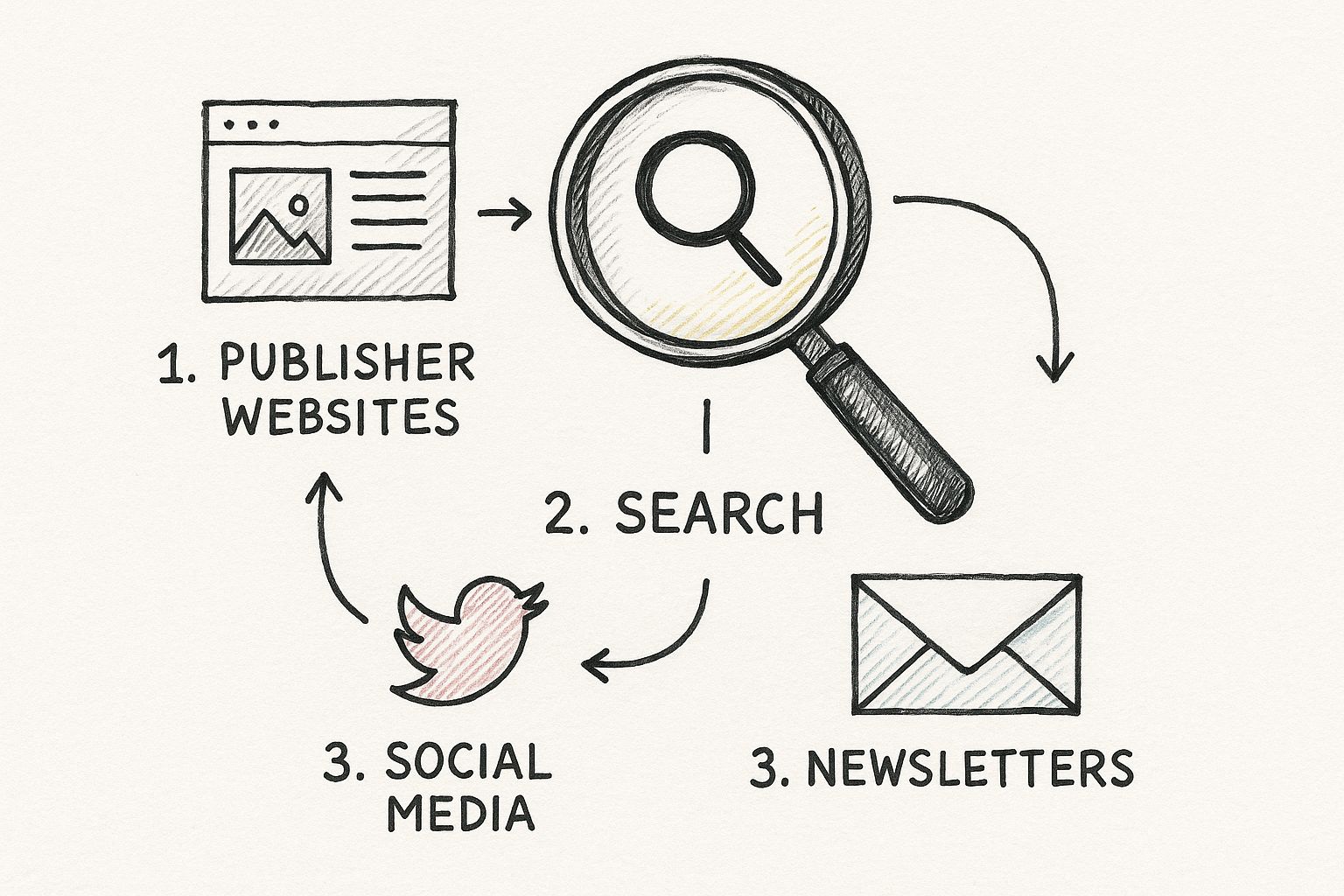
As you can see, building a good reputation is key to getting more and better ARCs down the line.
Polishing Your Profile
Your bio needs to immediately tell publishers who you are and why you matter. Get specific! "I read fantasy" is forgettable. Instead, try something like, "My platform is dedicated to epic and urban fantasy, where I connect with over 5,000 highly engaged genre fans across my blog and Instagram." See the difference?
Make sure your profile always includes these essentials:
- Live links: Don't just list your social media handles. Provide direct, clickable links to your blog, Bookstagram, Goodreads, TikTok—wherever you post reviews.
- Your stats: Back up your claims with numbers. Follower counts, monthly page views, and newsletter subscribers give you instant credibility.
- Your niche: Clearly state the genres you love and focus on. This helps publishers know if their book is a good fit for your audience.
One number rules them all on these platforms: your feedback ratio. This is the percentage of books you were approved for that you actually reviewed. Aim to keep this above 80%. A high ratio tells publishers you’re reliable, professional, and worth their investment.
Navigating the world of digital ARCs means getting familiar with the main platforms. Each has its own vibe and caters to slightly different audiences.
Top Platforms for Digital ARCs
| Platform | Best For | Key Feature | Tip for Success |
|---|---|---|---|
| NetGalley | Bloggers, Bookstagrammers, Librarians | User-friendly interface and a massive catalog of titles across all genres. | A high feedback ratio (above 80%) is non-negotiable for getting approvals. |
| Edelweiss+ | Booksellers, Industry Professionals, Serious Reviewers | In-depth publisher catalogs with detailed marketing and sales info. | Profiles are more professional. Highlight your industry connections or established review credentials. |
| BookSirens | Indie Authors & Reviewers with smaller platforms | Connects reviewers directly with independent and self-published authors. | Focus on providing detailed, constructive feedback, as authors highly value it. |
Getting comfortable with these platforms is the first step. Once you're set up, you can start making requests.
Writing a Request That Gets a "Yes"
When you spot a book you're dying to read, your request message is your pitch. "I'd love to read this" is a guaranteed way to get overlooked. You have to sell yourself and explain why you are the perfect person to review this specific book.
A little personalization goes a long way. For example: "As a reviewer who specializes in historical fiction with a focus on WWII narratives, my audience would be highly interested in this title. My recent review for a similar book reached over 10,000 readers on my blog and was shared by the author."
This approach does two things: it shows you’ve done your homework and demonstrates the tangible value you can bring to the publisher's marketing efforts.
How to Pitch Publishers and Authors Directly
While ARC platforms are great, sometimes the best opportunities come from a good old-fashioned email. Reaching out directly can land you copies of books that aren't being widely offered, but it’s an art form. This isn't about spamming inboxes; it's about making a genuine, professional connection.
Your first hurdle is finding the right person. For the big publishing houses, you're looking for a publicist, not an editor. Check the publisher’s website for a "media," "press," or "publicity" contact. For self-published or indie authors, their personal author website is your best bet—look for a contact page or a dedicated email address.
Pro tip: Never use a generic info@ address. Your carefully crafted pitch will almost certainly get buried in a digital slush pile. Find a specific person's email whenever possible.
Crafting a Pitch That Gets a "Yes"
So, you've found the right email address. Now what? Your pitch needs to be sharp, professional, and straight to the point. Publicists are juggling dozens of campaigns at once, so your email should make it incredibly easy for them to say yes.
Think of it as a mini-proposal that shows them exactly what you bring to the table.
Here’s a breakdown of what a successful pitch includes:
- A Clear, Scannable Subject Line: Get right to it. Something like "ARC Request: [Book Title] by [Author Name]" is perfect.
- A Quick Intro: Briefly introduce yourself and immediately link to your main platform, whether it's your blog, Bookstagram, or TikTok account.
- Show You've Done Your Homework: This is the most important part. Explain why you're the right person to review this specific book. Did you love the author's last novel? Do you specialize in that genre? Mentioning a few similar, popular books you've reviewed builds instant credibility.
- Share Your Stats: Don't be shy. Include relevant numbers like your follower count, monthly blog visitors, or average engagement rate. This gives them a clear picture of your reach.
- Make It Easy for Them: If you're open to a physical ARC, include your mailing address at the end of the email. This saves them a follow-up email and shows you're a pro who has done this before.
The biggest mistake I see reviewers make is sending a generic, copy-pasted email. Trust me, publicists can spot a form letter from a mile away. Take a few extra minutes to personalize each email for the specific book and publisher. It shows you're genuinely interested and turns your "ask" into a proposal for a professional collaboration.
What to Do After Your ARC Arrives
You got the email—congratulations, your request was approved! That feeling of excitement is one of the best parts of being a reviewer. But what comes next is what really counts and helps build your reputation as someone authors and publishers can rely on.
Being a great ARC reader isn't just about scoring free books; it's about being a trusted partner in a book's journey to launch.
The moment you download that file, the clock is officially ticking. The biggest unwritten rule in the book world is to read and review your ARC before its official publication date. This is the whole point, really. Your early review helps generate that crucial buzz a book needs to get noticed right away.
Writing an Honest and Helpful Review
Your review is your currency in this community. It should always be honest, but remember that "honest" doesn't have to mean harsh. The goal is to provide feedback that’s insightful and respectful, even if the book wasn't your favorite. A good way to do this is by taking solid notes as you read. Learning how to organize research notes will make it much easier to pull specific details for your final review.
The best reviews balance personal opinion with specific examples from the text. Instead of just saying "the pacing was slow," you could explain which plot points dragged or which character arcs felt underdeveloped. That kind of specific feedback is gold for authors and incredibly helpful for fellow readers.
Maximize Your Review's Visibility
Once you've polished your review, it's time to share it. Don't just post it in one place and call it a day—get it out there where it can make a real impact.
- Your Home Base: Start by posting the review on your primary platform, whether that’s your blog, Bookstagram, or TikTok account.
- Retail Sites: On publication day, copy your review over to major retailers like Amazon and Barnes & Noble. Reviews on these sites can directly influence sales.
- Goodreads: This is a non-negotiable. Posting on Goodreads is essential for helping other readers discover the book.
Finally, make sure you close the loop. When you share your review on social media, tag the author and the publisher. It’s a small, professional touch that shows you appreciate the opportunity and makes sure they see your thoughtful contribution.
In an industry where over 300,000 new titles are published each year in the US alone, your early review helps a book find its footing. This initial momentum is especially vital for self-published authors, as explained in this comprehensive https://manuscriptreport.com/blog/self-publishing-guide. You can find more details on these publishing statistics over at TonerBuzz.com.
Common Questions About Reading ARCs
As you get more involved with advanced reader copies, you'll naturally run into some tricky situations. Knowing the unwritten rules and etiquette is the best way to build solid, lasting relationships with publishers and authors, making sure you stay on their list of trusted reviewers.
Let's tackle some of the most common questions that pop up.
What If I Don't Like The Book?
This is a big one. What happens when you just can't get into a book you've been given? First, remember you are never obligated to write a glowing, five-star review for a book you didn't enjoy. That would be dishonest.
The key here is professionalism. Instead of just saying "I hated it," focus on providing constructive, thoughtful feedback. You can talk about elements that didn't work for you—maybe the pacing felt off, or a character's motivations weren't clear. Publishers actually value this kind of balanced feedback, as it can be more useful than simple praise.
Can I Talk About The Plot?
Tread very, very carefully here. The answer is almost always a hard no when it comes to major plot points. ARCs are confidential, pre-release materials. Leaking spoilers ruins the reading experience for everyone who comes after you and can seriously damage your relationship with the publisher.
Your job is to generate excitement, not give away the ending. Stick to discussing themes, the quality of the writing, and how the book made you feel. There's a real art to promoting a book without spoiling it, and you can learn more about how to publicize a book while keeping its secrets safe.
Physical Copies And DNF Dilemmas
It's the dream of many book reviewers: a mailbox full of beautiful physical ARCs. But is it okay to ask for them? Absolutely, but manage your expectations.
Digital copies (e-galleys) are the standard now because they're cheap and easy to send out. Physical copies cost a lot more to produce and ship, so they're often reserved for reviewers with a large, established platform. It never hurts to express your preference for a physical copy, but don't be surprised or disappointed if you're offered a digital version instead.
And what about the dreaded DNF, or "Did Not Finish"? It happens to every reader.
Forcing yourself to finish a book you can't connect with often leads to a rushed, negative review. It's far better to professionally step back. Just let the publicist know or archive the title on NetGalley with a brief, respectful note explaining why it wasn't for you.
This kind of transparency is always appreciated more than just going silent. It shows respect for the author's work and keeps the door open for future review opportunities.
Ready to turn your manuscript into a marketing powerhouse? ManuscriptReport.com delivers comprehensive book reports with blurbs, keywords, ad copy, and social media content in just 10 minutes. Spend less time on marketing and more time on your next story with ManuscriptReport.com.
Turn your manuscript into a ready-to-market package
ManuscriptReport turns your full book into 20 launch-ready marketing assets — back-cover blurb, SEO keywords, comp titles, ad copy, and more.
Get Your Marketing Report →Enjoyed this article? Subscribe for more + get a free marketing roadmap template.
Receive regular updates on marketing best-practices, AI shortcuts, and get our proven 4-phase marketing roadmap template for free.